
TCPA Quiet Hours: 8 am–9 pm + Stricter States (2026)
· 7 min read · By Robert Lee, Mobile Solutions Architect
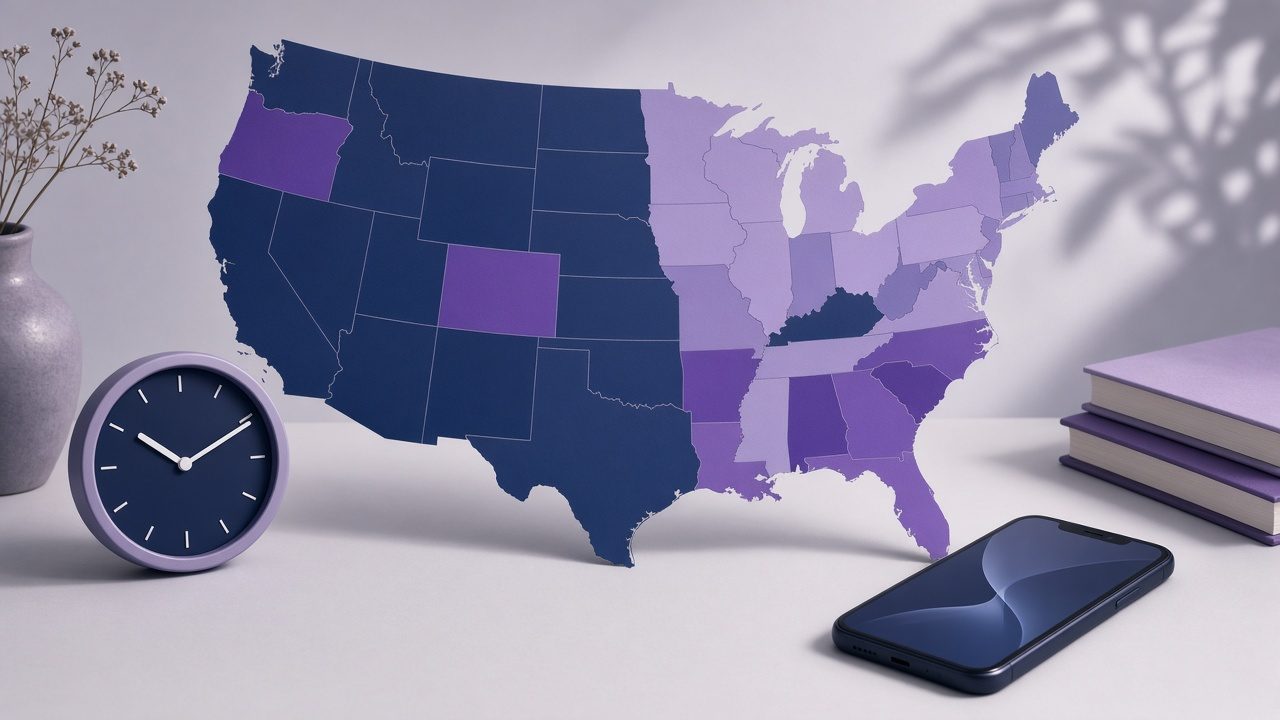
When is it a good time to send a text? Federal law is the easy part. The hard part is the state where the person actually is.
Short answer. Federal law lets you make telemarketing calls and send marketing texts between 8 a.m. and 9 p.m. in the recipient's local time. Many states are stricter. In 2026, the most common mistake is the time zone: a send that is legal in one state can land before sunrise in another.
The federal rule: 8 a.m. to 9 p.m.
The FCC's TCPA rules (47 CFR 64.1200(c)(1)) prohibit telephone solicitations to residential subscribers before 8 a.m. or after 9 p.m. in the recipient's time zone. The FTC's Telemarketing Sales Rule (16 CFR 310.4(c)) sets the same window. Courts and regulators generally treat marketing texts as calls, so in many jurisdictions these hours apply to SMS as well.
Under the TCPA's private right of action (47 U.S.C. 227(c)(5)), damages can reach $500 per violation, or up to $1,500 if willful. A class action multiplies that across every message in the campaign.
Quiet hours have become a litigation target
Starting in late 2024, several firms began filing class actions over texts sent outside the 8 a.m. to 9 p.m. window, often by just a few minutes. Several well-known consumer brands were named in early filings.
The open legal question is whether the quiet-hours rule applies at all when the recipient already gave consent. Two developments matter:
- Industry petition. In March 2025, the Ecommerce Innovation Alliance asked the FCC to confirm that people who gave prior express written consent cannot sue over message timing. As of mid-2026 reporting, the FCC had not ruled.
- A court decision. On April 30, 2026, a federal court in Delaware held in King v. Bon Charge that consent defeats a quiet-hours claim, because consented messages are not "telephone solicitations."
That decision helps, but it is one district court. It is not binding elsewhere. Documented consent is still your best defense.
Calling and texting hours by state
When a state window is tighter than the federal rule, the state window controls for anyone calling or texting into that state. The table below lists the most commonly cited differences. States that are not listed generally follow the federal 8 a.m. to 9 p.m. window, but confirm the statute before a campaign.
Shaded rows restrict Sunday or holiday outreach, or use different Sunday hours.
| State | Allowed hours | Sunday / holidays |
|---|---|---|
| Alabama | 8 a.m. – 8 p.m. | No calls |
| Connecticut | 9 a.m. – 8 p.m. | Allowed (same hours) |
| Florida | 8 a.m. – 8 p.m. | Allowed (same hours) |
| Illinois | 9 a.m. – 9 p.m. | Allowed |
| Kentucky | 10 a.m. – 9 p.m. | Allowed |
| Louisiana | 8 a.m. – 8 p.m. | No calls |
| Maryland | 8 a.m. – 8 p.m. | Allowed (same hours) |
| Massachusetts | 8 a.m. – 8 p.m. | Allowed (same hours) |
| Michigan | 9 a.m. – 9 p.m. | Allowed |
| Minnesota | 9 a.m. – 9 p.m. | Allowed |
| Mississippi | 8 a.m. – 8 p.m. | No calls |
| Nevada | 9 a.m. – 8 p.m. | Allowed |
| New Mexico | 9 a.m. – 9 p.m. | Allowed |
| Oklahoma | 8 a.m. – 8 p.m. | Allowed (same hours) |
| Oregon | 8 a.m. – 8 p.m. (since Jan. 1, 2026) | Allowed |
| Pennsylvania | 9 a.m. – 7 p.m. (since Oct. 18, 2026) | No Sundays or legal holidays |
| Rhode Island | 9 a.m. – 6 p.m. weekdays; 10 a.m. – 5 p.m. Sat. | No calls |
| South Dakota | 9 a.m. – 9 p.m. | No Sunday calls |
| Texas | 9 a.m. – 9 p.m. Mon–Sat | Sunday: noon – 9 p.m. |
| Utah | 8 a.m. – 9 p.m. | No Sundays or legal holidays |
| Washington | 8 a.m. – 8 p.m. | Allowed |
| Wyoming | 8 a.m. – 8 p.m. | Allowed |
Shaded rows ban Sunday or holiday outreach, or use a different Sunday window. Scroll sideways on a phone to see every column.
Details that trip people up
- Pennsylvania. As of October 18, 2026, Act 47 of 2026 expressly covers texts, voicemail, and ringless voicemail, not just live calls.
- Nebraska does not ban Sunday or holiday calls, but it limits autodialed and prerecorded messages on those days to 1 p.m. to 9 p.m.
- Holiday lists vary. Alabama, Louisiana, Mississippi, Rhode Island, Utah, and Pennsylvania each define "legal holidays" differently. Some include state-specific days such as Mardi Gras or Pioneer Day.
- Frequency caps travel with the hours. Florida, Oklahoma, and Maryland cap solicitations at three per 24 hours on the same subject. Oregon similarly limits repeat attempts.
- Emergencies. Louisiana and New York restrict solicitation calls in declared emergency areas.
The hard part: knowing where the person actually is
Landlines made time zones simple. Cell numbers do not. Someone with a 212 number may live in Los Angeles, and an 8:30 a.m. text in New York is 5:30 a.m. there.
A bulk phone number validator can append each contact's time zone, so you only send between allowed local hours, for example 8:00 am–9:00 pm.
That is why SubscriberVerify uses a location-determining algorithm that does not rely only on the area code.
Some states, including Maryland and Oregon, presume an in-state area code means an in-state resident. When the signals disagree, use the stricter rule.
A practical compliance approach
- Default to the strictest common window. For multi-state campaigns, 10 a.m. to 8 p.m. recipient-local time, with no Sundays, avoids most of the table above. Pennsylvania's 7 p.m. cutoff and Rhode Island's shorter hours still need their own rules.
- Route by the most conservative time-zone signal. Use the area code plus the billing or shipping address, and apply the stricter state when they disagree.
- Apply it everywhere. Dialers, SMS platforms, retries, queued sends, and drip sequences all need the same rules, not just live calls.
- Capture consent properly, and consider time-of-day language. Written consent is the best quiet-hours defense. An explicit "any time of day" disclosure is an extra safeguard some counsel recommend.
- Keep records. Store the consent record, send timestamp, recipient time zone, and message content. Pair that file with DNC screening and litigator checks before the campaign goes out.
- Recheck quarterly. Rules moved in Oregon, Pennsylvania, and elsewhere within the past year.
This guide summarizes commonly cited federal and state calling-hour differences as of November 2026. It is not legal advice. Confirm the rule that applies to your campaign before you rely on a window.
Screen the list before you send. Start with 10,000 free lookups — no credit card required — or create an account with 100,000 lookups for $50. Explore LitigatorVerify Start Free Trial
Screen the list before you send. Start with 10,000 free lookups, or create an account with 100,000 lookups for $50.
