
TCPA & SMS Carrier Restrictions in 2026: Cold Calling Rules
Published · Updated · 11 min read
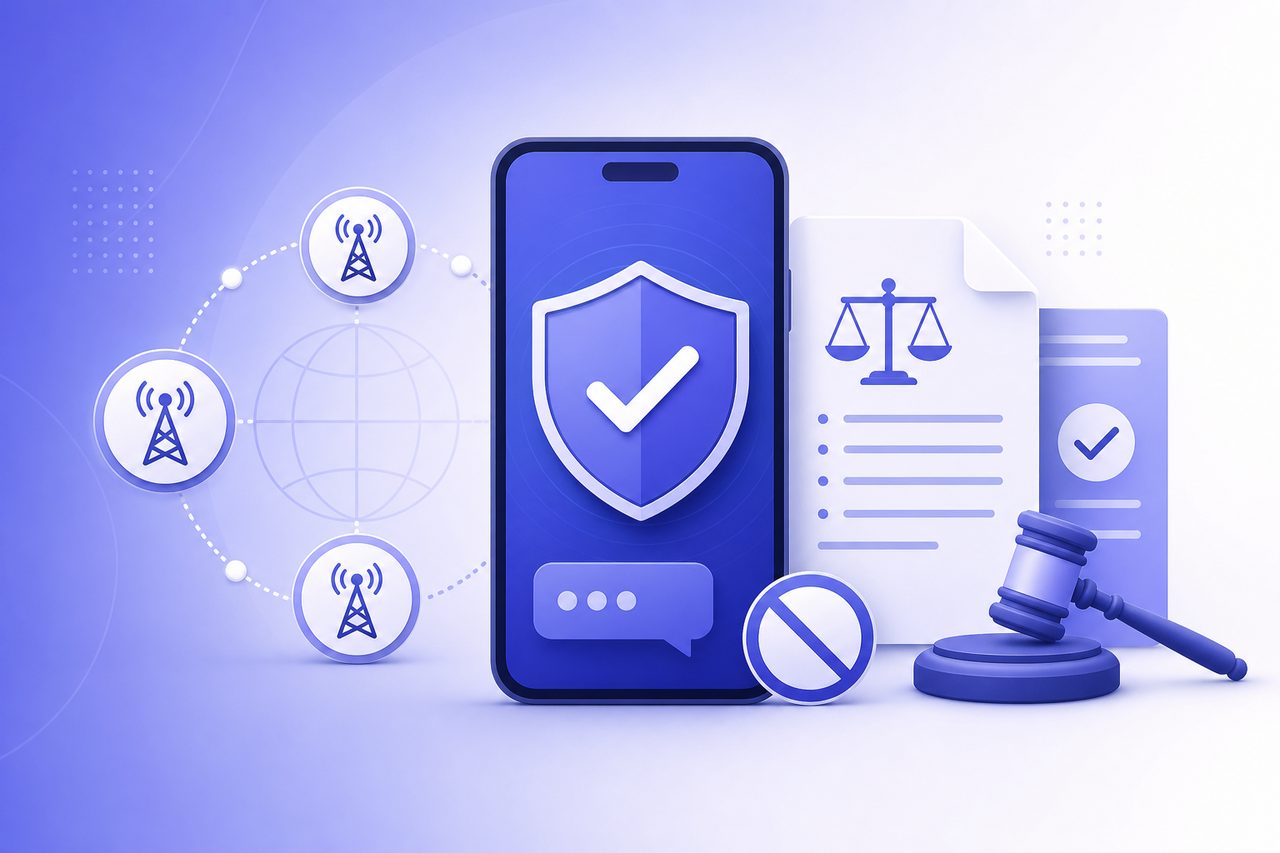
TCPA compliance in 2026 is not one checklist — it is two overlapping systems. Federal and state telemarketing laws (including the TCPA and FTC Telemarketing Sales Rule) govern whether you may contact someone. U.S. wireless carriers and messaging providers govern whether your SMS will actually deliver.
A campaign can satisfy TCPA rules and still fail because 10DLC registration, consent evidence or message content does not meet carrier requirements. Sustainable outreach needs both legal permission and carrier approval.
What changed for TCPA and SMS compliance in 2026?
- Unregistered application-to-person (A2P) traffic on local 10-digit numbers is generally blocked — not merely throttled.
- Carriers require stronger business, brand and campaign verification.
- Businesses must honor broader forms of consent revocation.
- The FCC's proposed one-to-one consent rule was vacated in January 2025, but clear and provable consent remains essential.
- Cold-call programs still face National DNC, internal suppression and recordkeeping duties.
- State telemarketing laws may be stricter than federal minimums.
- Statutory TCPA damages remain $500 per violation, and up to $1,500 when a court finds the violation willful or knowing.
The Eleventh Circuit vacated the FCC's one-to-one consent rule before it became nationwide law. That does not relax the need for conspicuous, campaign-specific consent disclosures and documentation.
SMS carrier restrictions businesses must follow in 2026
A2P 10DLC registration is effectively mandatory
Businesses using ordinary U.S. local numbers for A2P messaging should register the brand, the campaign use case, and the numbers assigned to that approved campaign. By 2026, major carriers block unregistered business traffic on 10-digit long codes.
- Marketing promotions and lead follow-up
- Appointment reminders and account alerts
- Customer-service notifications
- Two-factor authentication
- Automated conversational messaging
How 10DLC registration works
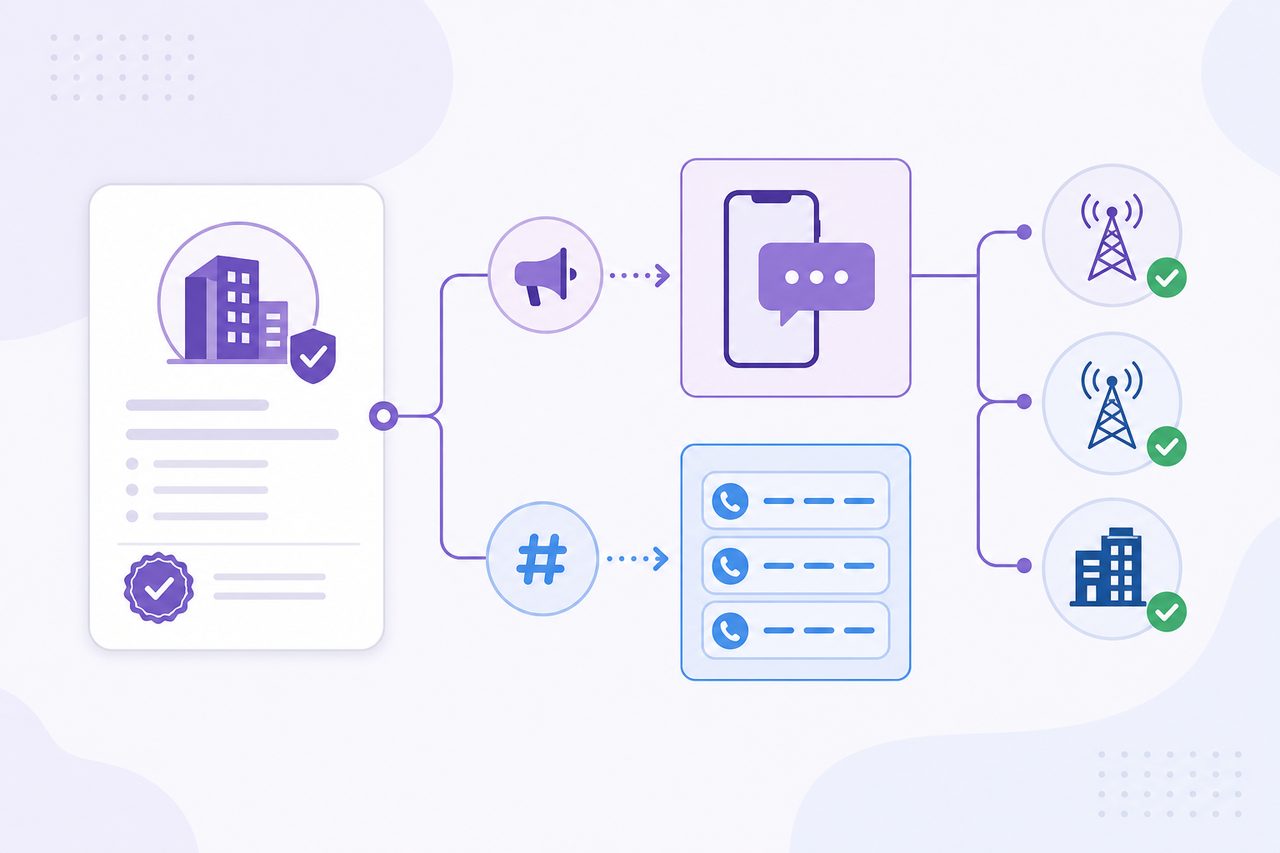
Registration usually runs through your SMS platform, which submits your details to The Campaign Registry (TCR). Expect to:
- Submit your legal business name, address and tax ID (EIN)
- Describe each campaign's use case, with sample messages and your opt-in flow
- Pass brand vetting, which may be automated or manual
- Assign your sending numbers to the approved campaign
Unregistered traffic may be filtered, throttled or dropped. Tactics such as rotating many numbers to spread volume and avoid detection (often called snowshoeing) are treated as evasion and can get every number in the campaign blocked.
Toll-free SMS also requires verification
Toll-free numbers are not an unregulated shortcut. Complete toll-free messaging verification with accurate company, use-case, consent-flow and sample-message information. Providers may request EIN or other business-registration details for new toll-free registrations in 2026.
Registration must match the live campaign
Common rejection or suspension triggers include registering one use case but sending another, using a different brand name in messages, hiding recurring-message disclosures, inaccessible opt-in pages, purchased lists without provable consent, sharing one campaign across unrelated businesses, and volume far above what was described.
Carrier approval is not TCPA consent
A2P registration verifies the sender and declared use case. It does not prove each recipient opted in. You need both proper carrier registration and legally sufficient, documented recipient consent.
CTIA Messaging Principles: the rulebook carriers enforce
Why do some campaigns get blocked even when the sender believes it followed the TCPA? Because carriers also enforce the CTIA Messaging Principles and Best Practices. They're industry guidelines, not law, but carriers and messaging providers treat them as binding conditions of service. They cover clear opt-in, sender identification, message-frequency disclosures, and support for the STOP and HELP keywords.
Breaking these standards can lead to filtered messages, suspended campaigns or blocked numbers, regardless of your legal position. Some carriers also publish non-compliance fees for severe violations, such as prohibited content, so check your provider's terms.
SMS opt-in requirements for marketing messages
Before promotional texts, the disclosure near the phone field or CTA should identify the sending business, message type, whether messages recur, that message and data rates may apply, how to get help, how to opt out, that consent is not required to purchase (when applicable), and links to terms and privacy policy.
Consent should be a clear, affirmative action: no pre-checked boxes. Single opt-in can work for many programs, but double opt-in (a confirmation reply) gives you stronger evidence if consent is ever disputed.
Do not bury consent inside terms consumers never open. Retain phone number, timestamp, exact language shown, source URL or form, checkbox status, lead source, policy version, confirmation-message records and subsequent opt-out history. For screening workflows, pair consent records with litigator checks and DNC screening before launch.
The FCC's one-to-one consent rule was vacated
The proposed rule would have required consent separately for each seller and limited messages to topics logically related to the interaction that produced consent. In January 2025 the Eleventh Circuit vacated it, finding the FCC exceeded its authority.
Lead generators and comparison sites should still name the sellers that may contact the consumer, avoid vague "marketing partner" language, record which sellers were displayed, and prevent buyers from using leads outside agreed scope. That is prudent risk management — not reliance on a rule that never took effect.
TCPA opt-out and consent-revocation requirements
Consumers may revoke consent through reasonable methods — not only your preferred channel. Recognize STOP, QUIT, END, REVOKE, OPT OUT, CANCEL, UNSUBSCRIBE, and natural-language requests such as "don't text me again."
Sync suppressions across SMS platforms, dialers, CRM, support tools, lead-distribution systems and vendors. A stop request in one channel must not be lost when another team launches a campaign. Confirmation messages should acknowledge the opt-out only — no new promotional content.
In practice: unsubscribe the number right away, send at most one confirmation, and don't message it again unless the person opts back in. Failing to honor opt-outs is one of the fastest ways to draw complaints, carrier action and lawsuits.
TCPA rules for cold calls in 2026
Rules vary by whether the call is manually dialed, uses an autodialer, artificial or prerecorded voice, ringless voicemail, soundboard or AI-generated audio. Manual dialing does not automatically make every cold call lawful — Do Not Call and state restrictions apply independently.
National Do Not Call Registry
For consumer telemarketing, register where required, obtain relevant area codes, scrub on schedule (at least every 31 days for the National Registry), maintain an internal company DNC list, honor direct do-not-call requests and document exemptions. The Telemarketing Sales Rule prohibits calling consumers who asked not to be called and restricts calls to National DNC numbers except where an exemption applies.
Established business relationships support some calls under certain rules but do not override a consumer's company-specific opt-out or solve prerecorded/automated-call consent requirements. Follow federal calling-hour limits and tighter state windows where applicable. Disclose caller identity, the business on whose behalf you call, commercial purpose and material offer terms; do not spoof caller ID.
Does the TCPA apply to B2B cold calls and texts?
Many traditional B2B calls are exempt from FTC Do Not Call provisions, but B2B is not a universal shield. Risk remains when the number belongs to an individual mobile subscriber, the recipient uses one phone for work and personal use, an automated or prerecorded call reaches wireless, a state mini-TCPA applies, the person opted out, or the pitch is ultimately a consumer transaction.
State mini-TCPA laws add another layer
Identify the recipient's state and apply the strictest relevant rules before dialing or texting. States may regulate calling hours, frequency caps, state DNC lists, caller registration, licenses or bonds, autodialing, prerecorded messages, consent language, record retention and private lawsuits with statutory damages.
Content carriers commonly restrict
Even legal products may be blocked when messaging platforms classify them as high risk: cannabis/CBD, illegal drugs, certain financial services, debt relief, gambling, firearms, adult content, hate-related material, phishing, fraudulent jobs and SHAFT categories (sex, hate, alcohol, firearms, tobacco). Restrictions vary by carrier, provider and sender type.
Some SHAFT categories can be approved with safeguards such as age gating, but many providers decline them, and sending without approval risks blocking. Other offers that often draw extra scrutiny include payday loans, cryptocurrency and investment pitches, affiliate marketing, and "get rich quick" or work-from-home offers.
Content habits that keep messages deliverable
- Use plain language and identify your brand in the first words
- Avoid misleading urgency, such as "Act now or lose your account"
- Skip ALL CAPS, excessive emojis and public link shorteners
- Include clear opt-out instructions
- Stay inside your registered use case. Don't switch from customer care to promotions mid-campaign.
Why compliant SMS still gets filtered
- High complaint or opt-out rates
- Sudden volume spikes or identical blast copy
- Link shorteners and low-reputation domains
- Brand mismatch or misleading urgency
- Traffic outside the registered use case
- Inactive numbers or messaging after opt-out
Throughput limits and monitoring
Even compliant traffic can be filtered if you exceed your campaign's per-second or daily limits, or send identical copy in large bursts. Work with your provider to pace sends and vary message templates. Then watch delivery rates, opt-out rates and carrier error codes after every send. A sudden dip is usually the first warning sign. Removing deactivated and landline numbers first, for example with a bulk phone number validator, keeps error rates from muddying that signal.
TCPA compliance controls lawful authority to contact someone. Carrier compliance controls whether the network delivers the message. You need both.
Recordkeeping for calls and texts
Retain consent records, opt-outs, internal DNC entries, National DNC scrub logs, campaign registrations, templates, call detail, vendor contracts, lead-source documentation, suppression transfers and complaint investigations for the period required by federal and state law, contracts and your retention policy. The FTC's amended Telemarketing Sales Rule expanded recordkeeping for campaign calls, prerecorded messages and claimed established business relationships.
Vendor and lead-generation compliance
Sellers often remain liable for vendor activity. Contracts should require TCPA, TSR, carrier and state compliance; approved consent language; complete consent evidence; suppression sharing; complaint reporting; audit rights; indemnification; and data return or deletion at termination.
Before contacting a lead: validate the number, confirm line type, verify consent covers your seller and channel, scrub federal and state DNC lists, check internal suppression, confirm calling hours, and store the compliance decision with evidence. SubscriberVerify API and bulk validation support carrier, litigator and DNC checks in one workflow.
2026 TCPA and SMS compliance checklist
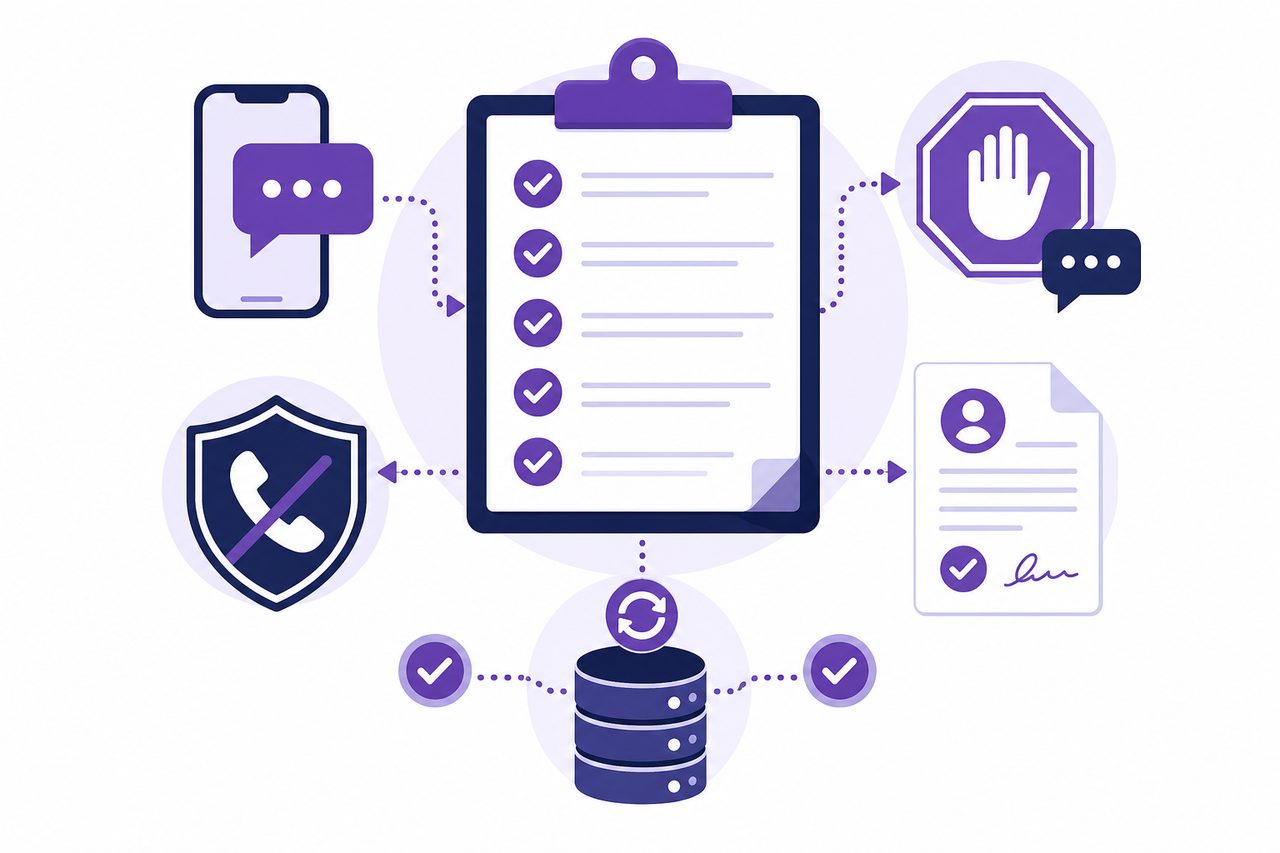
- Register every A2P 10DLC brand and campaign.
- Verify toll-free messaging numbers.
- Obtain clear consent before promotional texts or automated marketing calls.
- Preserve the disclosure shown at consent.
- Identify the sender in every message.
- Include functional opt-out instructions.
- Recognize natural-language opt-outs.
- Synchronize opt-outs across every platform and vendor.
- Scrub cold-call lists against applicable Do Not Call databases.
- Maintain an internal Do Not Call list.
- Apply federal and state calling-hour restrictions.
- Review state mini-TCPA requirements.
- Avoid prohibited carrier content categories.
- Monitor complaint, filtering and opt-out rates.
- Audit lead sellers and telemarketing vendors.
- Retain campaign, consent and suppression records.
- Test HELP, STOP and links before launch.
Screen numbers before every campaign. Carrier lookup, litigator flags and DNC status in one pass. Start free · LitigatorVerify · DNC Screening
Protect your next campaign. Start with 10,000 free lookups — no credit card required — or create an account with 100,000 lookups for $50. Explore LitigatorVerify Start Free Trial
